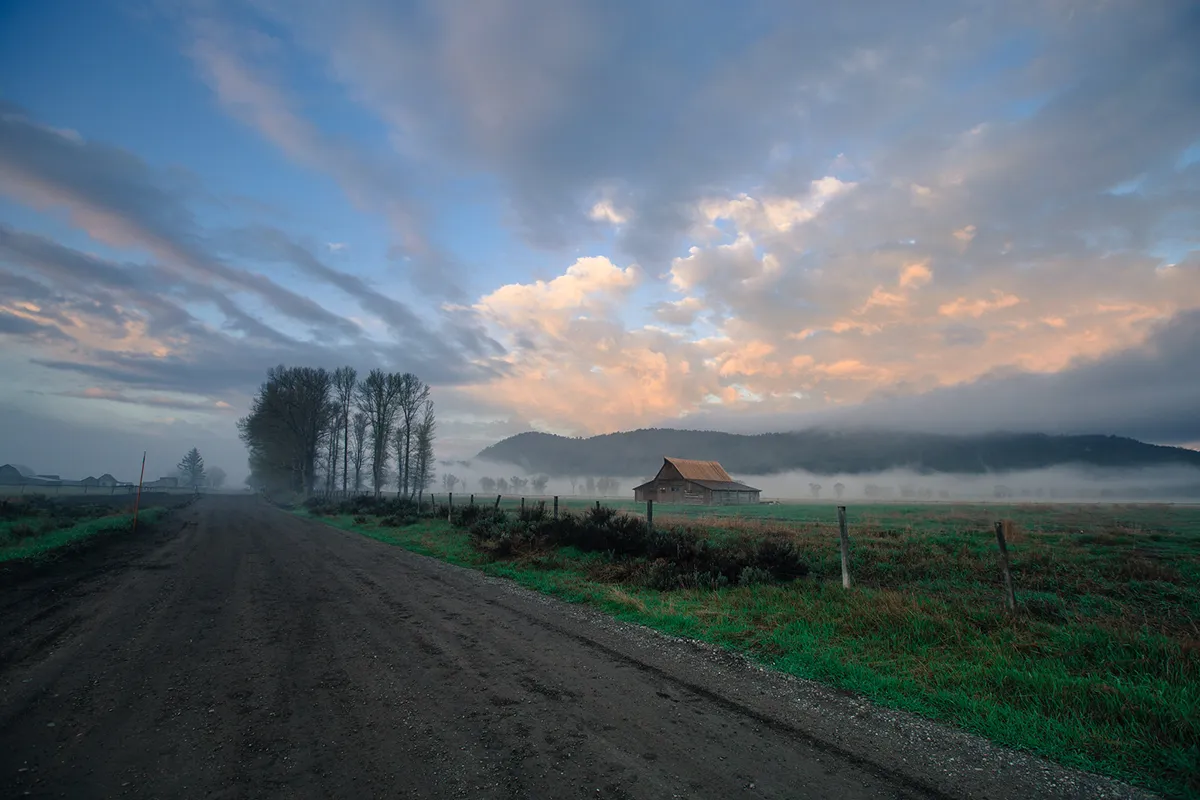
Discover the History of Mormon Row in Grand Teton National Park
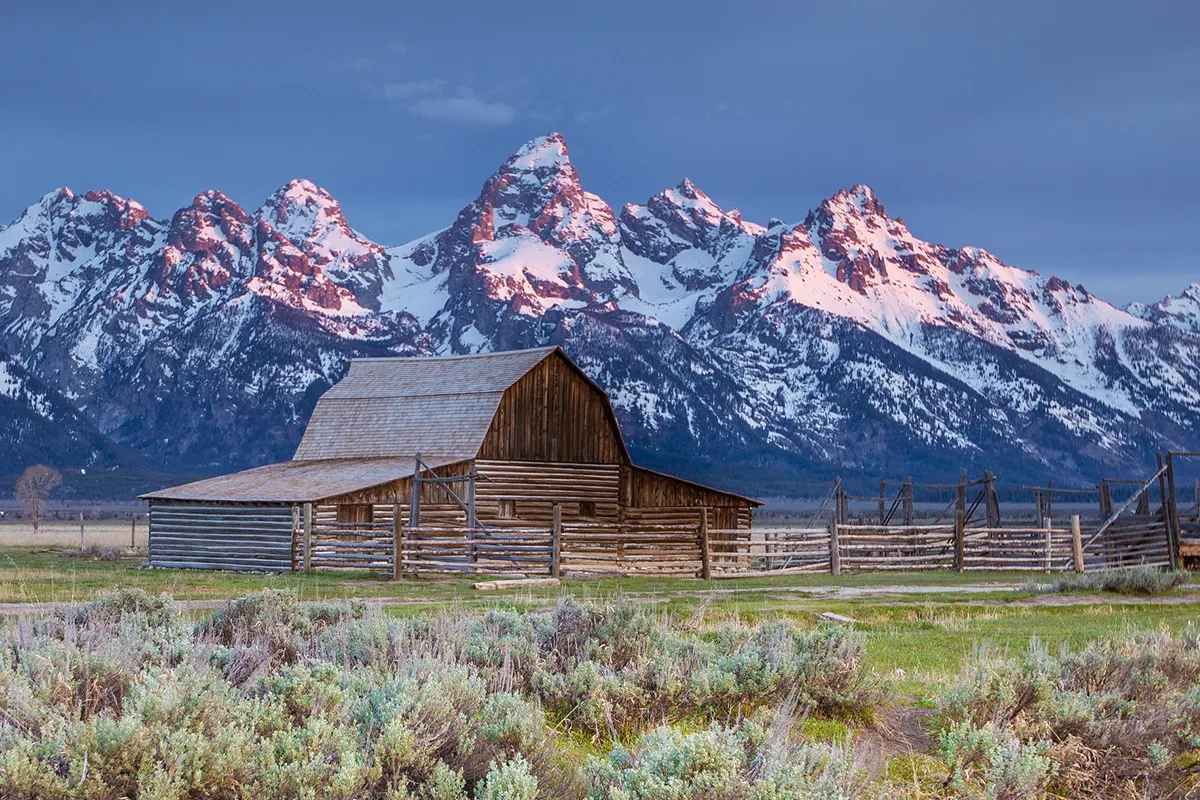
Have you visited Mormon Row? In 1997, Mormon Row Historic District was added to the National Register of Historic Places.
Packed with rich history of Mormon homesteaders and offering sweeping panoramic views of the Tetons, it’s an inspiring site that offers the opportunity to learn more about turn-of-the-century settlers who first arrived in the 1890s from Idaho, and eventually established a community named Grovont, otherwise known as “Mormon Row.”
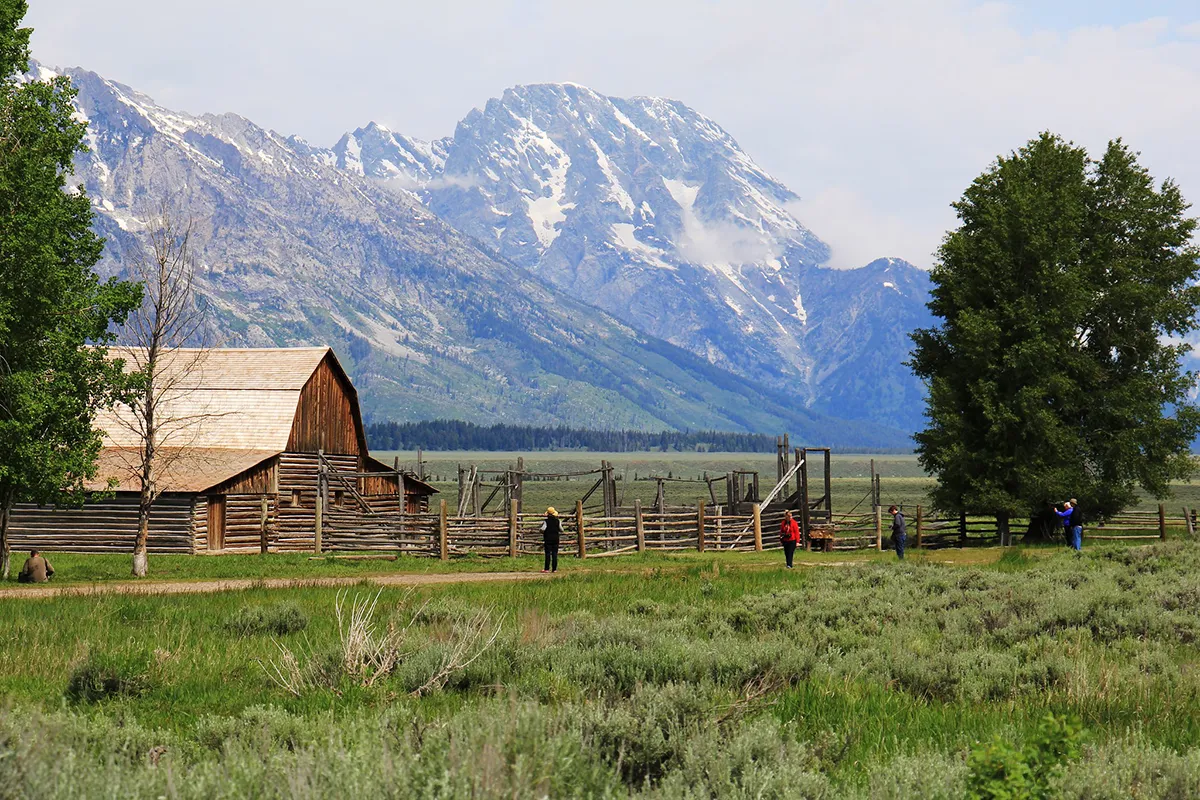
In 1908, Yellowstone National Forest was dissolved by President Teddy Roosevelt and it was opened to homesteading.
Later, the Homestead Act of 1962 granted 160 acres of public land to any adult citizen in exchange for living and cultivating the land for five years.
Due to fertile glacial till soil, shelter by Blacktail Butte and its location alongside the Gros Ventre River, Mormon Row was desirable to Mormon settlers seeking to share labor and community as outlined by their church.
The picturesque John Moulton Barn is a highlight of the district, built on an adjacent homestead to his brother, Thomas Alma (T.A.). The two brothers homesteaded on Mormon Row circa 1908.
Three decades after working the land, John Moulton constructed the pink stucco frame house and two-story gambrel barn just north of Antelope Flats Road in 1938, where he and his wife, Bartha Moulton lived as a main residence.
The salmon-pink shade for a repaint was a surprise from John for Bartha who had been in the hospital. While she did not adore the color, she graciously agreed to keep the bright exterior.

John Moulton sold the home to the National Park Service in 1953 with the caveat that he could keep a life lease on the property.
Bartha passed away in 1973 just after a tragic car accident that killed her son, Reed and her granddaughter. John kept the home until 1990 when he died at age 103.
The iconic “pink house” was restored in 2021 with support from the Grand Teton National Park Foundation and received new stucco on the bottom portion, which required moving it off its foundation and back onto it, as well as deconstructing the chimney.
Since 2021, The Grand Teton Association has operated our Mobile Van at Mormon Row using volunteer staff to deliver essential visitor services, including park and public land information, informal interpretive conversations, natural resource protection messaging, and interpretive retail sales.
If you visit Mormon Row this summer, be sure to look for our volunteers from June through September.
While park construction projects will affect road closures from May 1 – June 20 on Death Canyon Road and Trailhead and Moose-Wilson road, as well as cause delays on Teton Park Roundabout at the Moose entrance and Taggart Lake Trailhead and Trail, Mormon Row remains open with ongoing constuction. Stay up to date with full construction updates here: Grand Teton National Park Construction Updates.